

My toaster is dead.
Isn't it worth repairing? Then something goes wrong
If the new device is cheaper than the technician, in the end we all pay for it.
If a repair costs more than a new device, then it's not the device itself, but a system that rewards discarding and penalizes repairs. I think we should no longer put up with this, neither as customers at the checkout nor as a society that ends up stuck on mountains of electronic waste.
The day the toaster died
It started with one smell, not the pleasant smell of fresh toast, but the other, somewhere between cable fire and bad mood. The toaster gave one last, almost offended click and then said goodbye to retirement without a farewell letter.
So I did what you do in such a moment and checked if the thing could be repaired. The result was sobering because the broken part was not available individually but only as a so-called assembly, which cost almost as much as the entire toaster. On top of that came the shipping and the not insignificant question of whether I could handle it without burning the kitchen on the side.
A new toaster was only a few euros more on offer, and of course, I ended up buying the new one, even though I felt like someone caught picking up trash by the neighborhood.
Not everything was better in the past, but it was screwable
I spent a long time at sea, and on a ship, there simply isn't an electronics store around the corner. When something gives up in the middle of the Atlantic, it gets repaired, whether it wants to or not, and sometimes the temporary solution made of wire, tape, and goodwill lasts longer than the original in the end.
I took this attitude with me ashore, and that's why I first look at things from the inside before giving them up. The problem is that many devices don't want to be looked at from the inside at all because they are glued instead of screwed, or have screws that require a special tool that you can't buy anywhere. They are built like a safe, but unfortunately without the contents that make a safe valuable.
This is no coincidence, because anyone who designs a device so that it cannot be opened has made a conscious decision—against me as a customer.
Why the new device is so cheap
The price on the shelf only tells half the truth. A device manufactured in huge quantities in the Far East and then shipped in containers halfway around the world is incredibly cheap per piece, while an hour of work by a technician here with us is rightly priced. At the checkout, the bill "new is cheaper" actually holds true.
However, it no longer holds up as soon as you include raw materials, energy, transport, packaging, and electronic waste that ends up somewhere in the world. These costs are not on any receipt, but we pay them anyway, just later and indirectly.
And if I'm being honest, it doesn't even fit my own wallet, because a cheap device that breaks down after two years ends up costing me more in the long run than a solid one that lasts ten years and has to go to the workshop from time to time.
The opposing side has one point, but only one
Of course, you could argue that not everyone wants to sit with the soldering iron at the kitchen table in the evening, and that robust, repairable devices are usually more expensive to buy. Both are true, but neither argues against repairability, rather in favor of better deals, i.e., spare parts you get, manuals you find, and workshops that can make a living from it.
What needs to change
First and foremost, spare parts must be available individually, and at prices that don't look like a penalty, because if only one switch is broken, I want to buy a switch and not half a machine.
Also, devices with normal screws and regular tools need to be opened, because gluing is something for the craft class in kindergarten and not for household appliances that are meant to last for years.
And finally, repairs must be worthwhile for workshops at all, for which they need access to parts, software, and wiring diagrams, because even the best craftsman can do little if the manufacturer withholds the information.
A lot is happening in the EU right now, keyword "right to repair," and that's a good start. But whether it really works out in everyday life, we'll probably only find out when the next toaster smells strange.
What I can do myself
I don't want to wait until Brussels saves my toaster, and there are a few things I can already do myself. Before every purchase, I now check if there are spare parts for the device and how repairable it is, because a few minutes of research later saves me a lot of trouble.
From time to time, I also go to the repair café, where people sit and genuinely enjoy getting a device working again. Even if it doesn't work out, you learn something there and drink coffee with real people, instead of hanging in the hotline queue.
And I ask, in the store, with the manufacturer, and with customer service, because every question about spare parts is a small signal that there are customers who care about it.
My conclusion
A device that can't be repaired isn't a bargain, but rather a loan we pay off with raw materials, junk, and trouble. I want things that last, and if they don't last anymore, at least I want to be able to save them.
By the way, my new toaster runs flawlessly, but I've already turned it over once and looked for screws—you never know.
Freric
You may also like
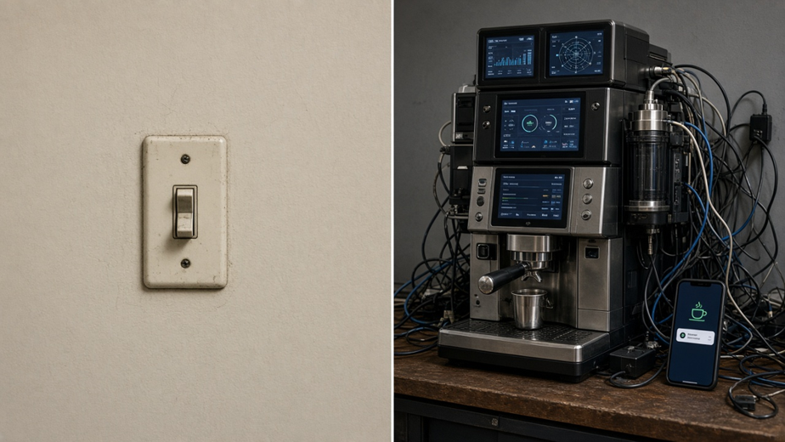
I like technology – but my toaster really doesn't need a subscription.
I really have enough technology around me now to be able to say that I'm no longer automatically impressed with many things just because it says "sma…
Read more →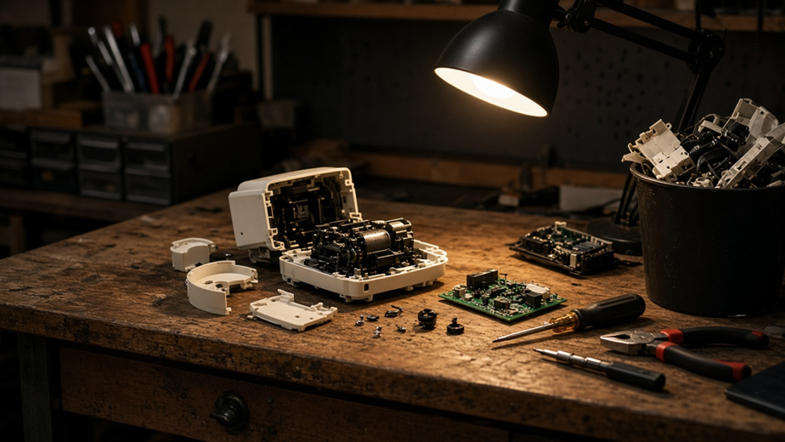
Why repairs are often more expensive than new devices today
I grew up with a time when "broken" did not automatically mean: get rid of it. When the TV was no longer running, the first thing to do was to look a…
Read more →
When the fridge is smarter than its owner: Does AI really have to be in everything?
Artificial intelligence is everywhere by now. In the smartphone, the television, the car, in photo apps, search engines, office programs, washing mac…
Read more →Want more between the blog posts? I share photos and short notes on Bluesky.
Comments
Write a comment