
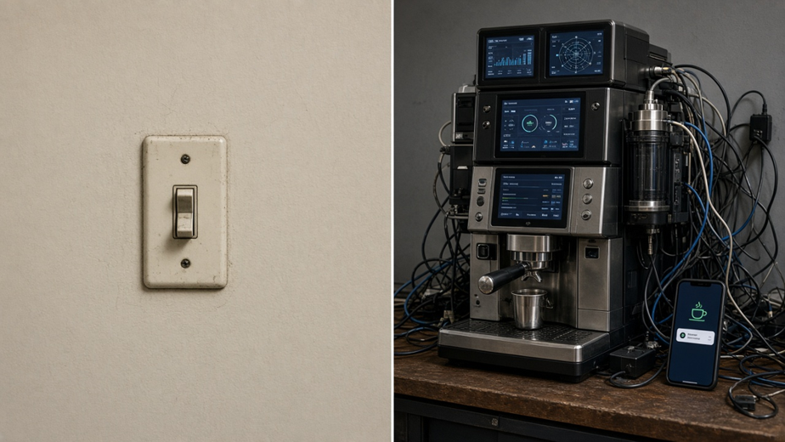
I like technology – but my toaster really doesn't need a subscription.
I really have enough technology around me now to be able to say that I'm no longer automatically impressed with many things just because it says "smart", "digital" or "intelligent" somewhere. I like technology, I use a lot of technology and I'm certainly not a person who fundamentally rejects every innovation. On the contrary. I find it exciting when devices make things better, faster or more convenient. But that's exactly where the crucial point lies for me: technology has to improve something. It has to give me a real advantage. Just because something is feasible doesn't mean I need it. After all, you can also build a toaster with facial recognition. The only question would be why the hell you should do that.
For me, a good smartphone is clearly one of the technical developments that I don't want to do without. That's not because I have to hang around it all the time, but because this one device has replaced an incredible number of other things in the meantime. I have a very good camera with me, a navigation, a calendar, banking, music, messages, tickets, payment, communication, information and sometimes even the control of other devices. In the past, I would have needed several devices for many of these things or at least had a lot more effort. Today, I do a lot of things within a few seconds. For me, this is useful technical progress because it really saves me time and simplifies my everyday life.
A tablet also has its fixed place for me. On the smartphone, some things are just too small for me, and I don't always want to open a laptop. Especially for reading, researching, watching content or for things that need a little more space, a tablet is exactly the right interim solution for me. It's not a device I bought because it looks modern, but because it fills a real gap. It's similar with the PC and the laptop. Many things now work on the go, but as soon as I work more extensively, edit texts, use tables or want to do something in a more structured way, I'm still happy about a decent screen, a keyboard and a mouse. It's always pretended that smartphones will replace everything at some point, but I don't see that in my own case. Some work on a small touchscreen is simply cumbersome, no matter how powerful the device is. Anyone who has ever seriously tried to edit a larger table on a mobile phone knows roughly what origami must feel like with boxing gloves.
It's similar with smart TVs. Having streaming, media libraries, YouTube and other content directly on the TV is practical. I don't need any additional devices and can call up a lot of things immediately. It's convenient and usually works well. But at the same time, there is also the other side. In the past, you turned on a TV and the picture was there. Today, sometimes an operating system starts first, then maybe an update comes, then some app wants to be re-registered and in the end you search for the desired content longer than it used to take to turn it on. So the progress is real, but sometimes the convenience comes with a portion of extra work. The TV is then no longer just a TV, but a small computer with mood swings.
This is exactly what has become one of the most important standards for me: good technology takes work off my hands, bad technology creates new work. If I have to constantly reconnect, update, reset or search for a device in some app, then the benefit tips at some point. Then I'm no longer the user of the device, but its caretaker. And to be honest, I don't feel like being on call for my consumer electronics after work.
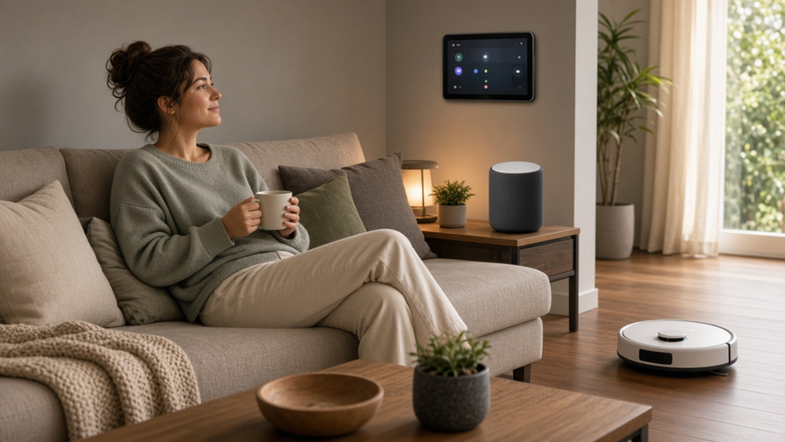
With the smart home, I see very clearly how useful technology can be if it is used correctly. I find automatic lighting practical. If the light is switched on depending on the time, movement or brightness, I don't have to think about it every time. Shutters that go up and down at sensible times can be just as convenient. A heating control system that only keeps rooms warm when they are actually in use can even save energy. For me, these are examples where the technology works in the background and is therefore pleasant.
But not every device needs Wi-Fi. I don't need a coffee machine that tells me via mobile phone that it's now ready for use. If I want coffee, I have to go to the kitchen anyway. I also don't need a kettle that I start from the sofa if I still have to get up afterwards to get the cup. This may be technically interesting, but in practice it's not a big win for me. If the device ever asks if I want to rate my kettle, it will probably fly out the window.
A washing machine with an app, on the other hand, can be useful if it's in the basement and I want to know when it's ready. If it's right next door and beeps anyway, the benefit is much smaller. That's exactly what I mean: The same function can be useful in one household and completely superfluous in another. An app doesn't automatically turn a device into a revelation.
I also see this in a differentiated way with the oven. I think it makes sense to have a function that allows me to check whether the oven is really switched off when I'm out and about. That can provide security. On the other hand, whether I have to be able to switch on the interior lights from my smartphone is more of an example of developers sometimes adding functions because they can and not because someone has seriously asked for them. There's probably a product manager sitting somewhere and saying, "We're still missing a selling point." And five minutes later, the oven has Wi-Fi.
I'm much more generous when it comes to security technology. Cameras, motion detectors, door sensors or smoke detectors that send a notification in an emergency can have real added value. If I'm not at home and something happens, I want to know. This can help to limit damage or react more quickly. But even there, it quickly becomes apparent how important good software is. A camera that sounds the alarm every time a leaf moves will eventually be ignored. If I get ten false positives, I may no longer take the eleventh seriously. Good technology therefore does not have to provide as much information as possible, but as relevant information as possible. I don't need a camera that reports to me that a moth has probably behaved suspiciously at 03:14 a.m.
The benefits for me when it comes to energy are very clear. Photovoltaics, electricity storage, smart meters and intelligent consumption control are exactly the kind of technology in which digitization can make a real difference for me. If I can see when electricity is produced, when I consume a lot, when it is stored and when grid electricity is cheap or expensive, I can actually influence my behavior and my costs. This is not just a nice graphic on the mobile phone, but can mean hard cash.
Intelligent control becomes particularly interesting when it comes to dynamic electricity tariffs. If electricity is cheaper at certain times, a system can, for example, charge a storage system or use certain consumers in a targeted manner. That's exactly where I want automation. I don't want to get up at three o'clock in the morning just because the price of electricity is particularly low at the moment. If technology takes care of something like this itself, it makes sense for me because it takes work off my hands and can save money at the same time. My smart home can work at night. I don't have to do that too.
I also see a lot of digital functions in the electric car that I wouldn't want to do without. Good navigation that schedules charging stops, shows available charging stations, takes charging power into account and calculates the battery level I arrive with makes longer journeys much easier. That's a real benefit. Information about current consumption or charging history can also be helpful. At the same time, there are also functions in the car that fall more into the category of gimmicks for me. I don't need a light show, a sound effect or a minute-long animation every time just because I got in. That may be nice the first time, but at some point I just want to drive off. I get into a car, not the opening show in Las Vegas.
For me, voice assistants are a particularly good example of how close meaningful and annoying can be to each other. Turning on the lights, starting music, setting timers or triggering certain processes without getting up is convenient. This often works well in everyday life. But as soon as I have to say the same command three times and get a completely different answer at the end, the comfort is quickly gone. Then a supposed relief turns into a small test of patience. If I say "lights out" and then the weather forecast for Lithuania is read to me, the system has missed the mark by a small margin.
Sometimes the classic light switch is actually the smarter solution.
I also see light and shadow in fitness watches and trackers. Steps, pulse, activity or training data can motivate and be quite interesting. Such devices can help to better assess one's own behavior. But there are limits to that, too. If a clock in the morning tells me that I slept badly after lying awake half the night, that's not a groundbreaking insight. I already knew that. I don't need an algorithm for this, but dark circles under my eyes.
Some evaluations almost seem to me as if technology really wants to say something, even though there is actually nothing more to say. At some point I will probably get the hint: "You have little exercise today." Thank you. I sat in the car for eight hours. I was also familiar with that.
What I really appreciate, on the other hand, are functions that work in the background and only appear when they are needed. For me, this is actually the ideal of modern technology. I don't want to be constantly reminded that some device exists. I want it to work. If it only informs me when something is relevant, that's perfect. A water sensor that never reports in everyday life, but immediately sounds the alarm in the event of a leak, makes much more sense to me than a device that sends me a daily report that everything is fine. I don't need a push message with "Congratulations, no pipe burst today".
This principle also applies to me with automatic vacuum cleaners. Of course, I can vacuum myself. But if a robot regularly makes its rounds and relieves me of a boring routine, I see a clear benefit. It saves time. That's the point for me. Technology is welcome to take over tasks that no one misses when they no longer have to do them themselves. In any case, I don't know anyone who sits sadly on the sofa in the evening and thinks: "It's a shame, I didn't have to vacuum at all today."
In the same way, automatic irrigation in the garden can make sense. I don't have to run around with a watering can every evening if a system can reliably do that. Technology that relieves monotonous work makes sense in principle. These are exactly the things that I don't think about using technology for later. It just works.
I also think sensors that detect water damage at an early stage are useful. A small sensor under a washing machine, dishwasher or in a basement room can prevent considerable damage in an emergency. This is a typical example of technology that is completely unspectacular in everyday life, but can be worth a lot at the right moment. It doesn't have to light up, play music or send me a monthly report.
I'm less enthusiastic about devices that are only "smart" because they have some kind of app. For example, I don't need a refrigerator that sends me messages. Of course, a camera in the refrigerator can theoretically be handy if I want to know if there's still milk on the go. But paying a significant surcharge just to be able to check what's in the fridge while shopping is too much for me personally. I can also just open the door and look inside before shopping. Surprisingly, this technology has been working for quite a long time and doesn't require Wi-Fi or firmware updates.
It becomes even more absurd for me with devices that solve problems that I didn't have at all before. I don't need a smart fork that measures how fast I eat. Neither does a drinking bottle that tells me via app that I should drink water again. When I'm thirsty, I drink. And if I regularly forget to drink, a simple reminder on my smartphone is probably enough. My water bottle doesn't necessarily have to have Bluetooth for that. I want to drink with it and not build a relationship.
Even a trash can with Wi-Fi doesn't convince me. I don't know exactly what information to expect from it. When it's full, I see it. When it stinks, I notice it. And if at some point he sends a push message with the message "Please empty", then that's technically correct, but not necessarily revolutionary. In the worst case, not only do I know that the garbage is full, but some cloud overseas as well.
Another topic that is increasingly annoying me are the countless accounts and apps. It feels like every device first wants my e-mail address, a password, an agreement to some conditions and, ideally, the registration for a newsletter. Even for simple things, you sometimes have to create a user account first. I want to turn on a lamp and not start a permanent business relationship with the manufacturer of the light bulb.
At some point, the app will come up and say, "We've updated our privacy policy." Of course you do. I just wanted light.
I find devices even worse where functions subsequently disappear behind a subscription. The device is purchased, the hardware is available, but I am only allowed to use certain functions if I pay extra every month. For real services, I can understand a subscription. Cloud storage, ongoing services or certain content cost money. But I find it difficult to artificially block basic functions of a device that has already been purchased.
If at some point my toaster requires a premium subscription for "extra crispy", a limit has been reached for me. There are probably three tariffs: Basic for warm, Plus for brown and Ultra for bread that really looks like toast.
I also take a critical view of this development with the car. If a function is already technically installed, but is only activated for a monthly payment, it feels wrong to me. I have already bought the vehicle. I don't want to be constantly reminded that the manufacturer has discovered other sources of income in my possession. I want my car to drive me and not subtly ask me every month if I would like to take out a small upgrade subscription.
One point that is also becoming more and more important to me is data protection. Not every device needs to know everything. If a simple app requires access to location, contacts, microphone and photos, even though this is not necessary for the actual function, I become skeptical. Technology should only get the data it really needs. That's actually a pretty simple principle. If my flashlight wants to know where I am, who I know and what I'm talking about, I'd at least like to know what kind of job it has on the side.
In addition, there is the question of longevity. A device that no longer works properly after a few years because the manufacturer no longer provides updates is no progress for me. If a small battery is permanently installed and the entire device therefore has to be disposed of at some point, this is also questionable. I prefer technology that works for a long time, is repairable and does not have to be replaced immediately just because some software is no longer supported.
This is where you realize that modern does not automatically mean sustainable. A device can be technically impressive and still waste resources unnecessarily. If I have to replace something every two or three years just because the software is no longer maintained, that's not a convincing concept for me. That's electronic waste with a fancy start screen.
What I also don't need are devices that constantly evaluate me. I don't need a refrigerator that tells me that I should eat healthier. I don't need a scale to give me a motivational speech every morning. And I don't need a mirror that analyzes my mood. I know myself what I look like in the morning. I don't need artificial intelligence for that. When in doubt, a look is enough.
At some point, technology can simply be quiet.
I want to decide for myself when I need information. Technology should support me, not constantly comment. I also don't want to hear from the bathroom in the morning that my "wellness balance" is only 63 percent today. There are days when coffee is completely sufficient as a diagnosis.
On the other hand, I find devices that really help me organize things better exciting. Sensible calendar integration, automatic reminders or systems that bring appointments and tasks together in a meaningful way can actually make everyday life more relaxed. If I have to forget less because technology helps me reliably, I see a clear advantage in that. This is technology with an order and not technology looking for a job.
Translation functions, navigation, speech recognition or good digital assistants can also be incredibly useful. Especially if they help at the right moment and don't try to take over every area of life. I want support and not a digital mother-in-law who suddenly has a say everywhere.
For me, it's now pretty clear how I recognize good technology. It saves me time, money or energy. It increases safety. It makes something much more convenient. Or it takes over tasks that I would otherwise have to do myself. If a device meets at least one of these points, it's worth taking a closer look for me.
If, on the other hand, the main advantage is that another LED lights up, a new app lands on my smartphone and I still have to manage a password, the device is welcome to stay on the shelf.
So I'm anything but an opponent of technology. I like new technology and I will continue to try things. But I'm no longer automatically enthusiastic just because something is digital. I want to use technology that helps me. I don't want to work for technology.
And maybe that's exactly the decisive difference between real progress and gimmickry for me: Good technology is hardly noticeable in everyday life because it simply works. Bad technology is constantly in touch, needs care, wants updates, demands passwords, sends notifications and tries to sell me a subscription in the end.
Then if in doubt, I'd rather take the light switch.
By the way, he hasn't asked for an account for decades.
Freric
You may also like
When the fridge is smarter than its owner: Does AI really have to be in everything?
Artificial intelligence is everywhere by now. In the smartphone, the television, the car, in photo apps, search engines, office programs, washing mac…
Read more →
Why I don't need every new technology right away – even if it makes me damn curious.
I have a small problem with new technology: I find it interesting. Sometimes so interesting that I study a device in detail, even though I don't real…
Read more →
Artificial Intelligence for Ordinary People – No Computer Science Degree at All
My second brain doesn't finish work – but sometimes I have no idea Artificial intelligence is now everywhere. My smartphone has AI, my computer has A…
Read more →Want more between the blog posts? I share photos and short notes on Bluesky.
Comments
Write a comment