
Why I don't need every new technology right away – even if it makes me damn curious.
I have a small problem with new technology: I find it interesting. Sometimes so interesting that I study a device in detail, even though I don't really need one. There, comparisons are made, researched, technical data is read, and functions are examined that I haven't even missed before. And at some point, I catch myself wondering if my previous device is even up to date. And five minutes earlier, it worked perfectly without any problems. But then some manufacturer comes around, presents their new marvel, and tells me that my technical life could improve significantly from now on. Of course, only if I'm willing to pay a reasonable amount for it.
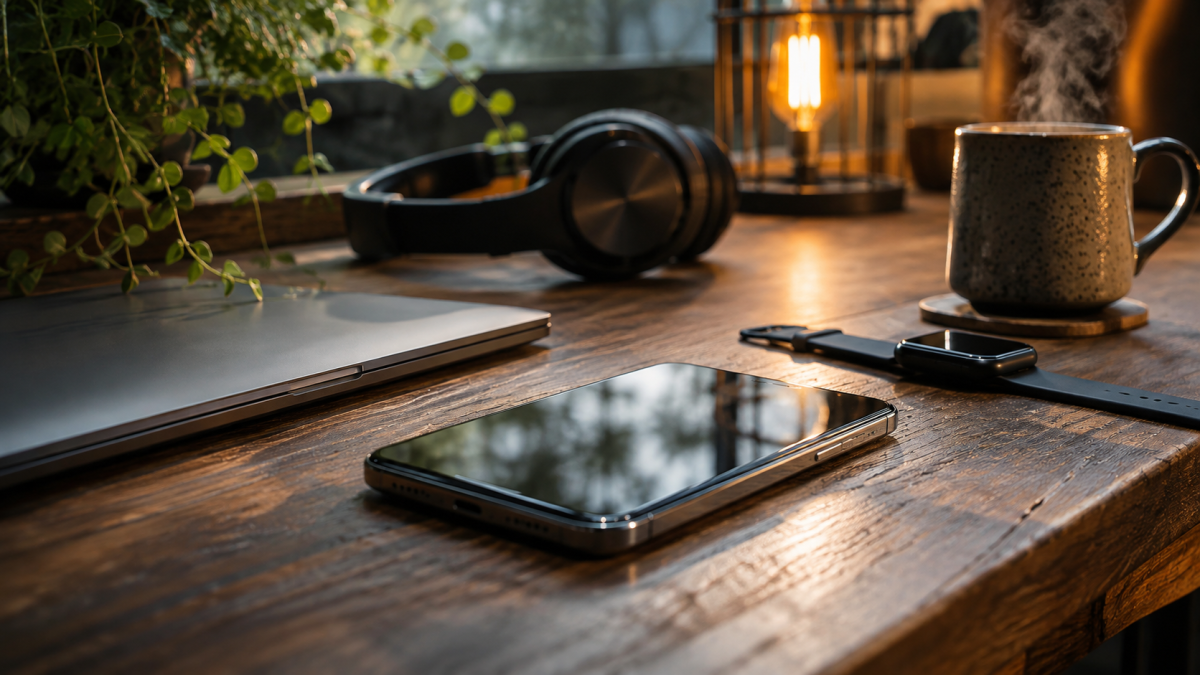
The mean thing is that I definitely consider myself someone who critically questions technical advertising. I know that companies want to make money, that product presentations are carefully staged, and that a new feature doesn't automatically mean a revolution. Still, I look at the new products. Not necessarily because I want to buy them, but because I'm interested in what is technically possible by now. And that's exactly where the problem begins. Pure interest eventually turns into a comparison with what I already own. The comparison turns into a small dissatisfaction, and suddenly a device I was completely satisfied with yesterday seems like a museum piece. A museum that apparently sits right on my desk.
When an improvement suddenly becomes a need
The tech industry masters an art especially well: it doesn't just sell us devices, but the feeling that something has been missing until now. A smartphone gets a faster processor, a camera with even more artificial intelligence, and a display that looks excellent under conditions where I normally don't look at my phone at all. It all sounds wonderful. But nowadays I wonder more often what difference I actually notice.
If an application only takes one and a half seconds to start instead of two seconds, that's technically an improvement. But is it also an improvement in my life? Does it save me so much time that I get to bed earlier in the evening? Hardly. I probably spend the half second saved opening the next application. Cameras also like to advertise with ever larger numbers. More megapixels, more computing power, more intelligent image editing. In the end, what interests me most is whether the photo looks good. When artificial intelligence turns a gray November sky into a Caribbean sunset, that's impressive image processing, but it doesn't have much to do with reality anymore.
Of course, there are technical improvements that make a real difference. A significantly better battery, a more reliable connection, a brighter display, or a feature I've been missing until now can be good reasons to switch. I just don't want to automatically confuse every improvement with a purchase reason anymore.
My enthusiasm for technology sometimes takes on a life of its own
It becomes especially dangerous for my wallet when a new device connects several of my interests. Smart home, photography, artificial intelligence, network technology, or energy management are topics where I can easily spend hours dealing with technical possibilities. Sometimes just announcing a new product is enough, and my inner technical officer preemptively requests an unscheduled budget release.
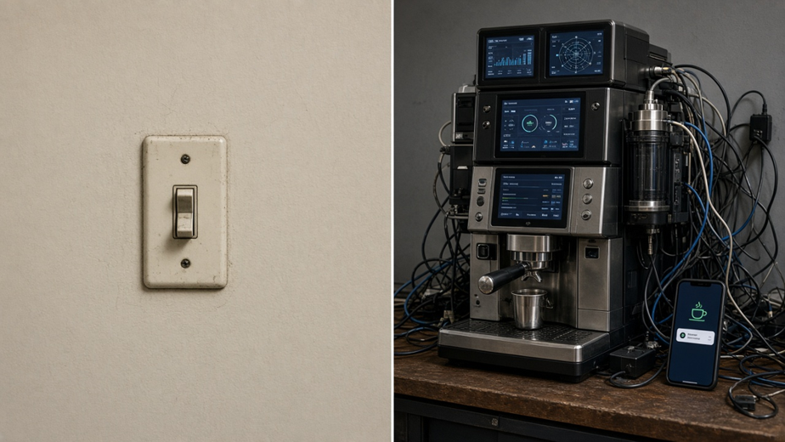
I find it exciting when devices communicate with each other, processes are automated, or new software simplifies tasks that have so far been cumbersome. At the same time, I know that especially in smart homes, a seemingly small improvement can quickly turn into a bigger project. A new sensor is supposed to be integrated, which requires an additional central unit, which in turn operates with a specific radio standard, which another device only supports through an additional interface. In the end, I actually just wanted to know if a window is open, and I set up a small IT department in the living room on the side.
Sometimes, of course, crafting is part of the pleasure. I like to engage with such things because I want to understand how they work. For me, that's a hobby and not solely a matter of cost-effectiveness. But I think you should be aware of this difference. Do I buy something because I really need it, or simply because I enjoy trying out new technology? Both are legitimate. But I shouldn't constantly sell the second one as an absolute necessity.
Once the new technology creates new problems
What tends to be a bit neglected during product presentations is the time after unpacking. Everything works perfectly on stage. The new device automatically detects all existing components, connects to the network within seconds, and then does exactly what the manufacturer promised. At home, reality sometimes looks different.
The app first wants a user account, then five permissions, and then a firmware update. The update takes longer than expected, the device restarts, and then explains to me that a certain function is only available with a paid subscription. Of course, the connection to the existing system doesn't work immediately either. For that, I have to work through several help pages that tell me to turn the device off and on again. Thank you very much for this technical breakthrough. As an adult, I would never have thought of this idea.
I'm exaggerating a bit, but for me, exactly such things belong to the honest consideration of new technology. A device can be excellent on paper and still cause more work than it saves in everyday life. I am particularly critical of products that are permanently dependent on a cloud connection. If the manufacturer discontinues their service or changes their terms and conditions, a functioning device can suddenly become a limited item. In the worst case, I have bought a piece of hardware whose most important functions depend on decisions over which I have no influence.
That's why I'm now also interested in questions that are rarely printed in large size on colorful advertising posters. Does the device work without internet? Can I export my data? How long are security updates available? What happens if the manufacturer shuts down its servers? And can I still use the device sensibly in a few years?
The hidden costs behind the purchase price
Another point is the ongoing costs. In the past, you bought a device and then owned it. Today, you often still own the case, but for some functions you have to pay monthly to keep the software friendly to you. A bit of cloud storage here, a premium feature there, additional evaluations only in the Plus package, and the particularly interesting automation naturally only in the most expensive plan.
I fundamentally have nothing against subscriptions. If a service is regularly maintained, incurs ongoing costs, and offers me a comprehensible benefit, a monthly price may be justified. What bothers me more is when a product gives the impression at purchase that all important features are already included, and I then realize that I have to sign additional contracts for actual use.
Accessories, spare parts, and compatibility with existing devices are also part of the total bill for me. What good is a cheap device if I need a new central unit, extra adapters, and another charger? In the end, I did get a bargain, but my account sees it a bit differently. And my drawer with cables, whose original purpose has long been forgotten, is getting new again.
Why I don't want to artificially age working devices
I find it especially annoying when technically flawless devices lose value prematurely due to lack of software support or unnecessary restrictions. A smartphone can still be fast enough after several years, have a good camera, and run all necessary applications. However, if no more security updates are provided, a problem eventually arises that has little to do with actual performance.
For me, a long service life is therefore an important quality feature. I want to replace devices whenever there is a reasonable reason, and not just because a manufacturer has already introduced three successor models. I don't want to delay every technical purchase until the device only works with friendly encouragement. If something actually no longer meets my requirements, it can of course be replaced.
I just think that an existing device deserves a fair chance. Sometimes a battery replacement, a new setting, or a better software solution is enough to fix a problem. And sometimes the supposedly outdated technology isn't the problem at all. It just doesn't make quite as much of an impression anymore when I show it to others. However, that's more a matter of ego than electronics.
Do I really need it, or do I just want it?
I think that's the most important question I can ask myself with new technology. And it's uncomfortable because the answer isn't always as reasonable as I'd like. Of course, there are devices I just want to have. Because they're interesting, because I want to experiment with them, or because I enjoy working with them. I don't see anything objectionable in them, as long as the purchase remains financially reasonable.
It gets harder when I come up with a justification afterwards so that a wish becomes an alleged necessity. Then suddenly I absolutely need a new camera because the old model performs slightly worse under certain lighting conditions. Or a more powerful computer, because some application could theoretically benefit from additional computing power. That I hardly use this application so far, we cautiously leave out the argument.
I don't want to take away the joy of technology. That also includes occasionally trying something new, even if it has no immediate practical benefit. But I want to decide for myself when I spend money. Not the manufacturer, not some influencer with a friendly discount code, and not the advertising that tells me my life is apparently only worth living to a limited extent without the latest generation of devices.
Progress does not automatically mean buying new for me
For me, the best technical developments are not necessarily the ones promoted with the biggest numbers. Often, improvements convince me that actually make everyday life easier. Reliable software that causes fewer errors, proper data backup, good integration of existing devices, or longer battery life can be much more valuable to me than an additional feature that mainly looks good in promotional videos.
That's why I wish manufacturers would have less artificial innovation pressure and more sustainable product care. Devices should receive security updates for as long as possible, remain repairable, and function sensibly even without a permanent subscription. And when a new generation appears, it would be nice if the most important innovation wasn't just that the camera is now positioned two millimeters further to the left.
In the end, I remain a tech fan. I will continue to look at new devices, compare technical data, and look forward to interesting developments. I will also occasionally buy things I don't necessarily need because the technology behind them excites me. But I want to distinguish more precisely whether a purchase actually improves my life or if I just get the pleasant feeling of being up to date again for a few days.
Because one thing is certain: As soon as I bought the latest device, a developer somewhere was already working on the successor. And at the latest a year later, their marketing department explained to me that without this new model, I was practically living in the Stone Age without this new model.
Until then, my previous device is allowed to keep working. After all, it doesn't even know that it's supposedly outdated.
Freric
You may also like
I like technology – but my toaster really doesn't need a subscription.
I really have enough technology around me now to be able to say that I'm no longer automatically impressed with many things just because it says "sma…
Read more →
Not all USB-C is the same – why the same cable can suddenly do completely different things
Actually, USB-C should make a lot of things easier. A plug for smartphone, tablet, laptop, headphones, power bank, monitor and now everything that ne…
Read more →
No more capital letters, special characters, and password confusion
The password can be retired. I will not cry after him. Why I consider Passkeys to be one of the most meaningful developments in digital security and …
Read more →Want more between the blog posts? I share photos and short notes on Bluesky.
Comments
Write a comment