
Made in China was cheap yesterday – today it will be inconvenient for Europe's car industry
China builds, Europe regulates – and in the end the customer pays
I sometimes have the feeling that the European and Chinese car industries have been given the same task at some point: How do we manage to build electric cars that are technically interesting, suitable for everyday use and reasonably affordable? In China, they apparently said: "Good, then we'll build some." In Europe, a working group has probably been set up first to check whether an impact assessment is required for the establishment of a second working group. Of course, this is exaggerated. Germany has by no means suddenly become an automotive developing country. German manufacturers can build excellent electric cars, and BMW, Mercedes, Volkswagen, Audi, Opel and others certainly don't have to hide technically. My problem lies elsewhere: What good is the impressive engineering skill to me as a customer if I have to look at the price list afterwards to see whether my kidney is still useful on the used organ market?
To be fair, however, it has to be said that something is happening in terms of prices in the meantime. It is no longer true that German brands do not offer cheaper electric cars at all. The Opel Corsa Electric currently starts at 29,990 euros and, according to Opel, offers up to 357 kilometres of WLTP range. The MINI Cooper Electric, after all a BMW Group brand, starts at 27,500 euros and, depending on the version, is given a WLTP range of 290 to 400 kilometres. These are prices that are becoming much more interesting. At the same time, however, a look at the lower end of the market shows where the problem still lies: According to the ADAC, there will not be a single German new car model under 20,000 euros in September 2026 – neither electric nor with a combustion engine. When it comes to electric cars, you can find a Dacia Spring from 16,900 euros, a Leapmotor T03 from 18,900 euros or a Renault Twingo E-Tech Electric for 19,990 euros, for example. And as soon as the small city runabout is to become a family-friendly car with reasonable range, trunk space and long-distance suitability, the price climbs back up pretty quickly.
It is precisely at this point that I sometimes no longer understand the excitement about Chinese cars. Anyone who still automatically thinks of a tin can when they hear the term "car from China" in which the exterior mirror falls off after the driver's door on the passenger side slams shut, has slept through about twenty years of development. Chinese manufacturers have long since become serious competitors. BYD, Geely, Nio, XPeng, SAIC and others build vehicles with modern battery technology, high charging capacities, extensive equipment and sometimes very competitive prices. Of course, not every Chinese car is automatically a technical masterpiece. But after all, this is not the case with German cars either. Perhaps we should stop automatically equating "Made in Germany" with divine inspiration and "Made in China" with a hot glue gun in a backyard garage.
China has built up an enormous lead, especially when it comes to price. The International Energy Agency found that in 2024, almost two-thirds of battery-electric cars sold in China were cheaper than comparable combustion engines. More than half of the electric car models on offer there were less than 30,000 US dollars. In Europe, the situation was quite different: Here, manufacturers have long focused heavily on larger and higher-margin vehicles, and affordable models remained comparatively rare. In Germany, the average price of a battery-electric car in 2024 was still around 20 percent higher than that of a comparable combustion engine. In my opinion, it is precisely this price problem that is at least as important as any discussion about range or charging infrastructure.
Yes, China has massively supported its car industry. This should not be argued away, because the EU Commission has explicitly stated after its anti-subsidy investigation that the Chinese battery car value chain benefits from state aid that can economically harm European manufacturers. Therefore, additional countervailing duties have been in force since the end of October 2024. For BYD, the rate is 17 percent, for Geely 18.8 percent and for SAIC 35.3 percent; for other manufacturers, different rates apply depending on the company. These measures are generally designed for five years. In 2026, however, there will already be the first exceptions to so-called price obligations. For example, Volkswagen Anhui's Cupra Tavascan, produced in China, may be imported at an agreed minimum price under certain conditions and will be exempt from the countervailing duty in return.
So Chinese funding does not play a subordinate role. But it doesn't explain everything either. A state can give a manufacturer a lot of money – this does not result in a good battery, no decent software, no efficient factory and no production of millions of vehicles. China has combined government support with gigantic quantities, a very closely interlinked supply chain and fierce competition between its own manufacturers. According to the IEA, battery prices there fell by about 30 percent in 2024, while the decline in Europe and the US was more like ten to 15 percent. The IEA attributes this difference to stronger competition, higher manufacturing efficiency and better integration of supply chains, among other things. This is something that we in Europe should take a closer look at, instead of just explaining every Chinese price tag with the word "subsidy".
And while we are discussing this whole industrial policy, the topic is taking on a completely different dimension: the oil crisis and rising consumer prices. Suddenly, the electric car is no longer just about climate protection, enthusiasm for technology or the question of whether someone particularly likes to drive off silently at the traffic lights. For many people, this is now becoming a very simple household calculation. In mid-September 2026, diesel already cost more than 2.40 euros per liter nationwide. On September 16, the daily average was even 2.453 euros, according to the ADAC. So the notorious 2.50 euros are no longer a theoretical horror number that might come at some point. They are practically already standing in front of the gas station and waving.
In addition, there are general consumer prices. The inflation rate in Germany was 2.9 percent in August 2026. Energy products were 10.5 percent more expensive than a year earlier, fuels as much as 27.7 percent. The Federal Statistical Office attributes the sharp increase in the price of fuels in particular to the development of the crude oil market as a result of the Iran war. At the same time, one should not blame everything on crude oil alone when it comes to petrol station prices: The ADAC points out that the price of crude oil and the exchange rate only partially explain the current price level and that refinery, distribution and other costs also play a role.
For the normal driver, however, at some point the precision mechanics of pricing are pretty much irrelevant. He doesn't get up in the morning and think: "Today I'm going to analyze the geopolitical impact on refinery margins and then transform my individual mobility portfolio." He stands at the pump and thinks: "Shit, over 100 euros again."
And then you start to calculate. Let's take a diesel with seven liters of consumption per 100 kilometers. At 2.50 euros per liter, the fuel alone costs 17.50 euros per 100 kilometers. If you drive 15,000 kilometers a year, this adds up to 2,625 euros in fuel costs per year. Just for refueling. No oil change, no maintenance, no vehicle tax and no bread roll from the gas station, the price of which is now probably also linked to Brent crude oil.
In my opinion, this is exactly where a huge opportunity for the electric car arises. An electric car with 18 to 20 kilowatt hours of consumption per 100 kilometers can cause significantly lower energy costs if charging cheaply. If you can charge at home, perhaps even have a photovoltaic system on your roof, you will suddenly get a completely different bill. Even those who charge in public occasionally can still be significantly lower than the current cost of a diesel, depending on the tariff. Of course, you can't pretend that electricity is free. Charging prices can also be high and fast charging on the road in particular is not necessarily cheap. But if diesel is permanently marching towards 2.50 euros, the economic bill for an electric car will be interesting for more and more people.
That's when the question of buying a car changes. In the past, it might have been said: "An electric car would be nice, but is it even worth it?" Today, it could increasingly become: "How long do I actually want to pay two and a half euros for a liter of diesel?" And that's exactly when the purchase price becomes decisive. Many people may start to consider scraping together their savings, selling their old car or financing something if they can subsequently save a significant part of their running fuel costs. However, this only works if there are affordable electric cars at all that fit their everyday lives.
And that's exactly where Germany is not yet far enough in my opinion. Not because there are no cheaper models at all. They are now available. A MINI Cooper E for 27,500 euros or an Opel Corsa Electric just under 30,000 euros show that something is moving. But a MINI is not a family station wagon and a Corsa does not suddenly become a space miracle for a family of four with holiday suitcases just because it says "Electric" on the back. If you need space, reasonable range, a usable trunk and long-distance suitability, you will quickly end up well above 30,000 euros again. And it is precisely in this area that I still lack the big breakthrough of German manufacturers.
That's why we don't just need any cheap electric car so that you can tick a box in a statistic. We need vehicles that normal families can actually use. Four or five decent seats, a trunk that fits more than two shopping bags and a guilty conscience, 400 kilometers of real everyday usability would be nice, proper fast charging, reasonable assistance systems, warranty and a price at which you don't reflexively apply for a loan for 96 months after configuring it. If European industry can offer such a car for 25,000 or 30,000 euros on a broad front, the discussion about Chinese competition will immediately become completely different.
Instead, I sometimes have the impression that we spend a lot of energy on making Chinese cars more expensive instead of consistently getting our own cheaper. I can understand why the EU is taking action against proven subsidies. Fair competition is part of a functioning market. But a tariff does not solve the basic problem. If a Chinese electric car costs 30,000 euros and the comparable European vehicle costs 40,000 euros, the perfect solution is not to increase the price of the Chinese car to 40,000 euros as well. Congratulations. Now we have two expensive cars. The customer is likely to fill up with diesel again for 2.50 euros out of enthusiasm.
That's exactly why I think Europe needs to talk much more about its own framework conditions. Energy prices, battery production, raw materials, software, approval procedures, production costs and scaling are at least as important as import duties. Germany has no fundamental problem with developing good electric cars. The know-how is there. The problem is to bring this technology into vehicles in sufficient quantities that the normal employee can afford. After all, a car does not become a people's electric car by making the central display three inches larger and the ambient lighting now able to switch between "arctic sunset" and "mystical lavender".
The average buyer simply needs a car at some point. Four wheels, usable range, reasonable charging, heating, air conditioning, assistance systems, enough space for shopping and family and as little fuss as possible. In addition, a price at which the household budget does not look like a medium-heavy bank robbery after ordering. That doesn't sound very glamorous, but that's exactly what the mass market decides in my opinion.
China, of course, also has massive problems. Competition there is brutal, manufacturers are engaged in a price war, margins are coming under pressure and not every one of today's well-known brands is likely to survive in the long term. This is not an automotive land of milk and honey, where BYD picks batteries from the trees in the morning and Geely distributes cars free of charge at noon. But this competitive pressure ensures speed. Models are being developed quickly, batteries are cheaper, production processes are more efficient and software is adapted more quickly. If the competitor offers a better-equipped vehicle for less money tomorrow, it is difficult to prepare a PowerPoint presentation entitled "Strategic Response Options 2032" for three years. You have to react.
And that's where my European elephant comes in. I sometimes think of the EU as a huge, highly educated elephant on this issue. It has a data protection officer, an environmental report, a competition committee and probably a 417-page code of conduct on the proper use of its trunk. While the elephant is still checking whether it can take a step to the left, BYD passes on the left, Geely on the right and XPeng on the back. Two honk. Meanwhile, the third installs a software update.
Of course, we need rules. We need security, data protection, environmental standards and fair competition. Nobody wants to have an electric car whose battery spontaneously decides to become its own sun when parked. And of course, Europe must not simply ignore state distortions of competition. But regulation must not become a substitute for innovation. If we put more effort into making Chinese cars more expensive than producing European cars cheaper, we are turning the wrong end of the charging cable.
For the customer, national pride can only be carried to a limited extent. When two cars are parked next to each other, at some point you ask quite banally: How much does this thing cost? How far can I get with it? How fast does it charge? How well does the technology work? How safe is it? What warranty do I get? Where can I get spare parts? What does the workshop network look like? And since this year, another question has been added: How often do I actually want to leave 100 or 120 euros at a gas station?
That's exactly why I want a strong German and European car industry. Not out of nostalgia and not because every car has to have a German brand on it. But because this industry has jobs, know-how and enormous economic importance for Europe. But that's precisely why I think it's dangerous to dismiss China's success mainly with subsidies. China has built battery factories over the years, integrated supply chains, produced huge quantities and offered electric cars in very different price and vehicle classes. At the same time, many European manufacturers have made excellent money for a very long time by selling ever larger, heavier and more expensive vehicles.
Now suddenly competition is just around the corner. And it won't go away just because we stick a customs notice on its windshield.
Perhaps this competition is even exactly what the European car industry needs right now. If Chinese manufacturers ensure that Volkswagen, BMW, Mercedes, Opel, Stellantis, Renault and others have to think even harder about how to build a really good electric car at a normal price, the European customer can only benefit.
Because I have nothing against German cars at all. Quite the opposite. I would just like to have some where "affordable" does not have to be ordered as special equipment.
And if diesel costs 2.50 euros or more on a permanent basis, Europe would be better off having an electric car in the showroom where a normal family does not have to think about which child they will trade in for it.
Because the customer will not wait forever for the European elephant.
Freric

You may also like

Between punitive tariffs and seat heating subscription: Germany's e-car problem.
Why does China get cheap e-cars and we can't? I've been asking myself this for a long time. Why do Chinese manufacturers manage to bring electric car…
Read more →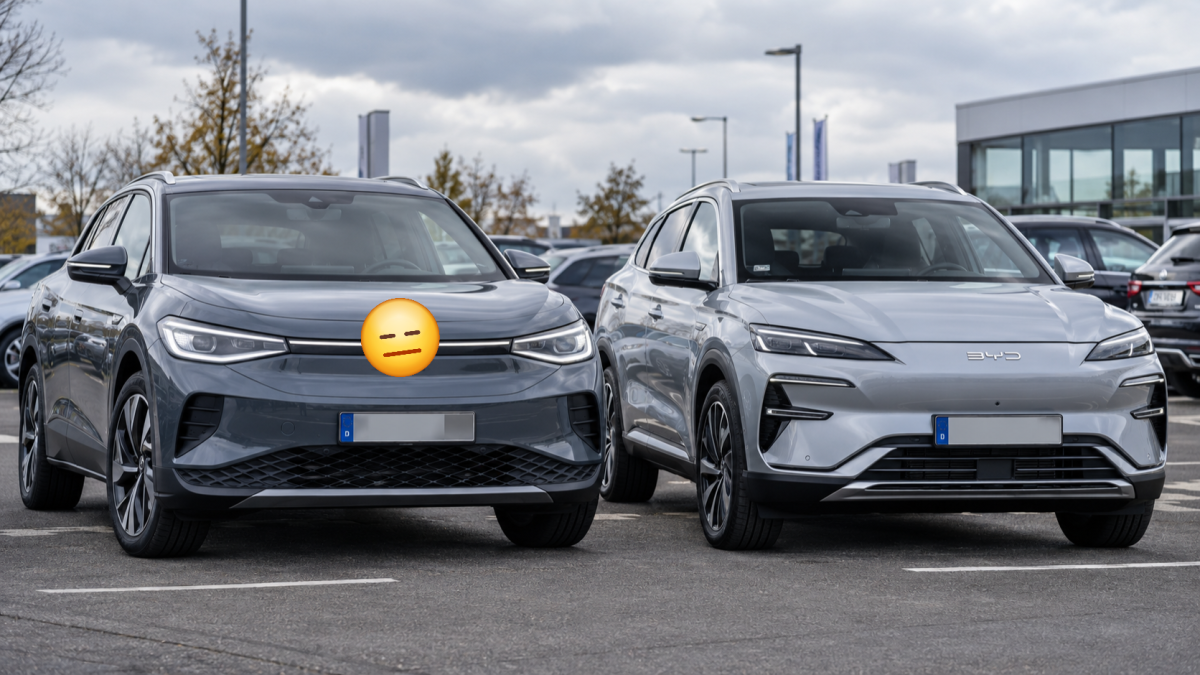
VW is recalling thousands of cars again – and I'm thinking about China.
German engineering – and yet another recall at Volkswagen It wasn't that long ago that I dealt with the question in a blog post about why I might pre…
Read more →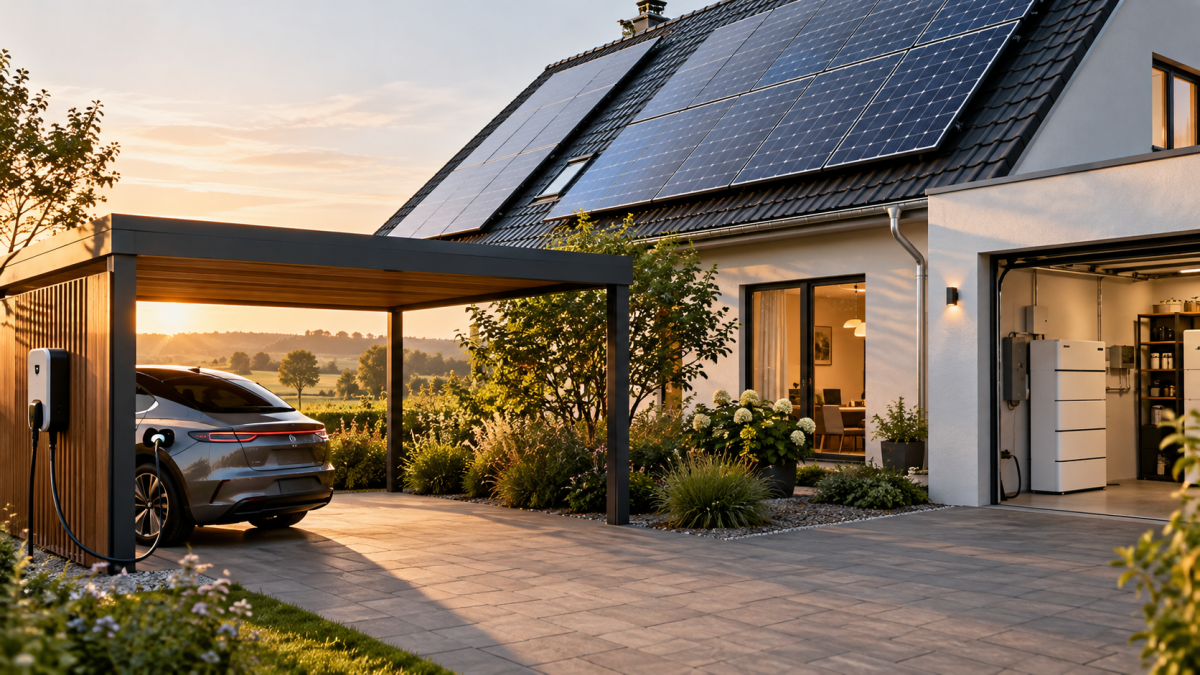
My house as a small power plant – with completely normal boundaries.
My solar system produces electricity – but when is it really cheap? When it comes to solar power, I'm fascinated not only by the fact that electrical…
Read more →Want more between the blog posts? I share photos and short notes on Bluesky.
Comments
Write a comment