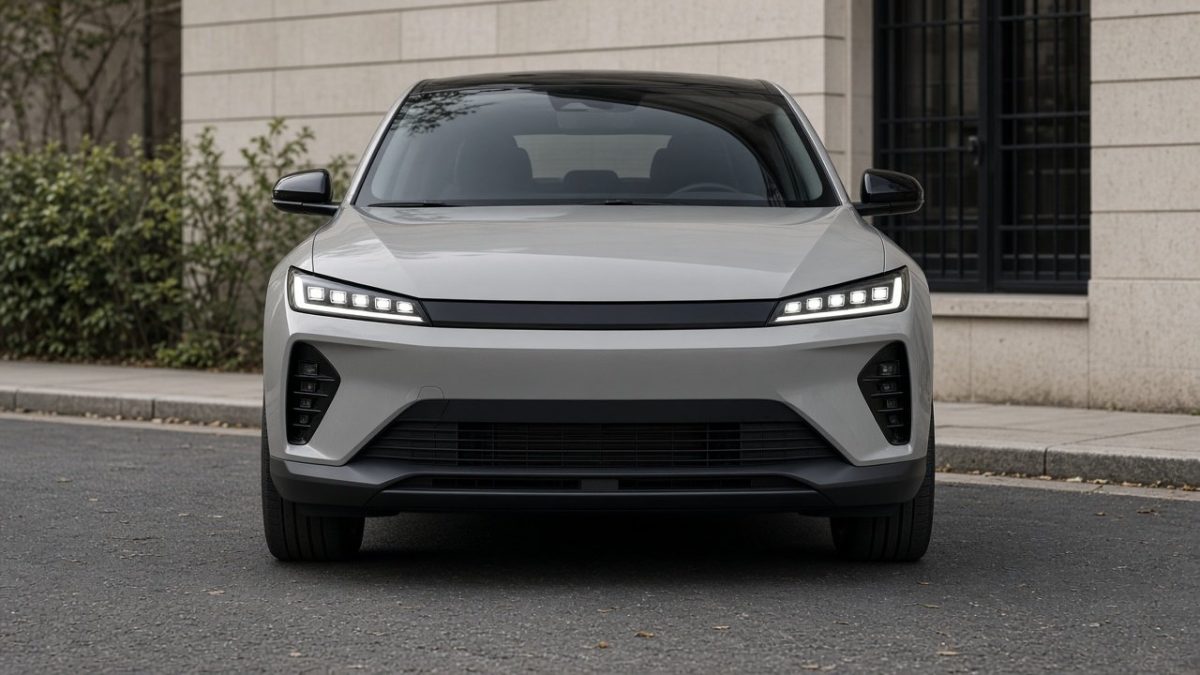
The Hyundai Ioniq 5 is an all-electric crossover vehicle with a striking, futuristic design. Is my electric car really more environmentally friendly – or am I just doing the math?
I drive a Hyundai IONIQ 5 AWD and charge it whenever possible with electricity from my own photovoltaic system. Actually, I could make it pretty easy for myself: The sun is shining, my system produces electricity, the electricity ends up in the car and no CO₂ comes out at the back while driving. The beautiful story of environmentally friendly driving would be ready. But I didn't want to make it quite that easy for myself. Because anyone who drives an electric car probably knows the counterarguments: "Yes, but the battery!" Then it's about lithium, nickel, energy-intensive battery production, Chinese coal-fired power and at some point also about the photovoltaic system, which ultimately also had to be produced first. And then there is another question that is surprisingly rarely discussed: What actually happens when the battery weakens after eight, ten or fifteen years? After all, the battery is one of the most expensive components of an electric car. If I calculate my carbon footprint over 200.000 kilometers, but implicitly assume that the first battery can withstand this distance without any problems and that the car still has a reasonable value afterwards, I could actually gloss over the whole thing. So I wanted to know more precisely. Not as an electric car driver who absolutely wants to prove that his purchase decision was right, but as soberly as possible: What happens if I really add everything up – car, battery, power generation, photovoltaic system, aging and, in the end, the economic side?
First of all, the critics of the electric car are right on one important point: My IONIQ 5 starts with a disadvantage. My AWD from 2022 has the large battery offered at the time with a capacity of 72,6 kWh, two electric motors with a combined 225 kW or 305 hp and weighs about two tons. This is not a small electric car, but a large, heavy and powerful car. Its battery requires lithium, nickel, graphite, copper and other materials. These have to be extracted, processed, transported and processed into battery cells. This costs energy and causes greenhouse gases. According to a recent European life cycle analysis by the International Council on Clean Transportation, or ICCT for short, the production of a battery-electric car currently causes about 40 percent more greenhouse gas emissions than the production of a comparable gasoline car. So my IONIQ actually comes out of the factory with a larger CO₂ backpack . There is no need to beat around the bush. What bothers me about many discussions, however, is that the bill suddenly ends at this point. You calculate the emissions of battery production, put the number on the table and declare the electric car to be an ecological aberration. Only my car doesn't stand in front of my house for twenty years after it has been manufactured. It drives. And that's exactly where the really interesting calculation begins.
A comparable combustion engine starts with a smaller production backpack, but then needs new fuel for every single kilometer. And gasoline does not grow in the pump either. Crude oil has to be searched for and extracted, transported by pipelines or tankers, sometimes thousands of kilometers, then processed in refineries, then transported again and finally distributed to gas stations. Only then can I fill it into my car and burn it. If I take a comparably larger gasoline engine with 8,5 liters of consumption per 100 kilometers, for example, and drive 200.000 kilometers with it, I need about 17.000 liters of gasoline. The combustion of this amount alone produces around 39 tons of CO₂. Extraction, refining and transport are not yet fully taken into account. I find these 17.000 liters quite impressive as an order of magnitude. My battery is first produced. The combustion engine, on the other hand, needs supplies throughout its life. Tank empty, 50 or 60 liters again. Then again. And again. Until the vehicle is scrapped at some point.
Of course, my IONIQ also needs new energy all the time. But I can generate a significant part of it myself. When the sun is shining and my car is charging at home, the energy chain is relatively short: sun, photovoltaic system, inverter, charging device, vehicle battery, electric motor. But here, too, it would be nonsense to speak of completely emission-free electricity. My solar modules had to be produced. Silicon, glass, aluminum, copper, cables and electronics were needed, as well as inverters and substructure. Everything had to be transported and assembled. If the solar power first ends up in my home storage system and later flows from there into the car, another battery is added. This also had to be produced and losses occur every time it is stored and discharged. From a purely energetic point of view, it therefore makes more sense to charge the car as directly as possible when the PV system is currently producing. Nevertheless, the production effort of a solar system is not an argument for the fact that solar power would ultimately be just as harmful to the climate as fossil energy. According to the Fraunhofer Institute for Solar Energy Systems ISE, the energy payback period of modern photovoltaic systems is now around the order of one year, depending on the location. To put it simply, after about a year, a system will have produced as much energy as was used to produce it. After that, it will continue to produce for many years, possibly decades. The argument that a modern solar module consumes more energy during its production than it could ever generate again during its lifetime therefore does not stand up to serious consideration.
For my IONIQ 5, Hyundai specified a WLTP consumption of about 17,7 to 19,0 kWh per 100 kilometers, depending on the tires. In real life, of course, this depends on temperature, speed, heating, air conditioning and driving style. For my calculation, I therefore prefer to use around 20 kWh per 100 kilometers , which would be about 40.000 kWh of electrical energy per 200.000 kilometers. The assumed gasoline engine, on the other hand, has 17.000 liters of fuel. In addition, there is the enormous difference in efficiency. A combustion engine does not convert a significant part of the energy contained in the fuel into movement, but into heat. The engine, cooling system and exhaust gases get hot because a lot of energy does not reach the wheels at all. An electric motor can actually use a much larger proportion of the energy it uses for locomotion. And when braking, I can even send some of my kinetic energy back into the battery through recuperation. In the combustion engine, this is mainly used to generate heat on the brakes. This is not a question of faith or political stance, but simply physics.
According to the current European life cycle analysis of the ICCT, the additional production effort of an average electric car compared to a gasoline car is already compensated for after about 17.000 kilometers . For my large and heavy IONIQ 5, I would not simply adopt this figure. I prefer to calculate more cautiously for myself and assume perhaps 20.000 to 30.000 kilometers . Whether the actual point is 19.000, 23.000 or 28.000 kilometers is less decisive for me. What is more interesting is what happens after that. In its European life cycle analysis, the ICCT comes to about 235 grams of CO₂ equivalents per kilometer for a gasoline engine, while a battery-electric vehicle with the expected European electricity mix is about 63 grams . For renewable electricity, it is about 52 grams. This corresponds to a reduction in lifecycle emissions of around 78 percent compared to gasoline engines. And this already takes into account battery production. The International Energy Agency (IEA) also comes to the conclusion that a medium-sized electric car causes about half as many lifecycle emissions as a comparable combustion engine over around 200.000 kilometers. This is remarkable because this global analysis also includes countries whose electricity is generated much more from coal and other fossil fuels.
And then I stumbled across a point in my own calculation that I had previously dealt with far too naturally: What about my battery after 100.000, 150.000 or 200.000 kilometers? Because my nice calculation works particularly well if I drive 200.000 kilometers with the same battery. If, on the other hand, a completely new 72,6 kWh battery has to be produced after ten years, its ecological backpack naturally also belongs on my balance sheet. In addition, the much more unpleasant personal question arises: Who will actually pay for it? The high-voltage battery is one of the most valuable components of my car. A complete replacement outside the warranty of an older electric vehicle can raise the question of whether the repair is still worthwhile at all.
However, a distinction must be made between aging and defectiveness . A vehicle battery usually does not work perfectly for eight or ten years and then suddenly drops dead. Rather, it slowly loses part of its usable capacity. My new battery had 72,6 kWh. If, for example, only 80 percent of it could be used after many years, I wouldn't suddenly have a broken car. I would have a car with a shorter range. This is exactly what is often confused in discussions. A battery with 80 percent residual capacity is not "gone". For someone who originally had a real range of perhaps 400 kilometers and later only reaches 320 kilometers, this can be annoying – but the car continues to drive.
Hyundai grants a warranty of eight years or 160.000 kilometers for the high-voltage battery of the IONIQ 5 in Europe, whereby the respective warranty conditions must be observed. However, one should not draw the popular reverse conclusion from this that the battery breaks down after eight years. After all, my washing machine does not automatically go up in smoke one day after its warranty expires. A warranty describes the period in which the manufacturer assumes certain risks, not the day on which a product reaches the end of its life.
In the meantime, there is also an increasing amount of data from electric vehicles actually driven. Fleet evaluations by Geotab, for example, showed average capacity losses of around 1,8 percent per year, although the values can fluctuate considerably depending on the vehicle, battery chemistry, temperature, charging behavior and fast charging percentage. In addition, battery aging does not simply proceed as if drawn with a ruler. Nevertheless, such data show that the widespread idea of "eight years old = battery scrap" has little to do with the reality of modern electric cars. A ten or twelve year old battery may still have a large part of its original capacity and thus continue to be used without any problems.
Even a defect does not necessarily mean that the entire battery, which weighs several hundred kilograms, must be replaced immediately. A high-voltage battery consists of cells or modules, sensors, cooling, electronics and battery management. Depending on the fault, individual components can be repaired or modules replaced. At the same time, I don't want to sugarcoat anything here either: If the entire battery actually has to be replaced outside the warranty, it can be really expensive. It would be dubious to give a flat price for my IONIQ 5, because there can be enormous differences between a repair, a refurbished replacement system and a brand-new complete battery. But an economic total loss of an older electric car due to severe battery damage is generally possible. Just as with an older combustion engine, capital engine or transmission damage can mean the end.
For my climate calculation, I therefore consciously have the bad scenario in mind: Suppose I actually had to have a second complete battery installed during the life of the vehicle. Then, of course, its production would also have to be taken into account. My car's CO₂ lead would be smaller and the ecological break-even point would be postponed. What is interesting, however, is that due to the large difference during the use phase, this would not automatically make the combustion engine the climate winner. Especially if the electric car is predominantly powered by renewable electricity, the distance over 200.000 kilometers is so significant that even an additional battery does not simply turn the entire balance around. Nevertheless, my original calculation would actually have been too optimistic without this possible second battery. And that's exactly why it belongs in an honest view for me.
However, I now find another question even more exciting: What is my electric car still worth after ten or fifteen years? This is not a climate issue, but an economic one – but at least as relevant for me as an owner. In the case of a combustion engine, a buyer of an older car assesses the engine, transmission, rust, mileage and maintenance history. In the case of a used electric car, a new key figure is added: the state of health of the battery, often referred to as the State of Health or SOH. A ten-year-old IONIQ with 90 percent residual capacity, for example, is likely to be evaluated completely differently than the same vehicle with 65 percent. I therefore assume that a reliable battery certificate could become more or less important in the used car trade in the future than a neatly documented checkbook or a traceable engine history is today.
However, an aging battery does not automatically have to be economically worthless. If it is no longer attractive for a car at some point, it can still be used as a stationary storage system. After all, for a home storage system, it plays a much smaller role whether a battery still has 70 or 80 percent of its original capacity. In addition, a battery contains considerable amounts of valuable raw materials. Lithium, nickel, cobalt, copper and aluminum do not simply disappear. The European Battery Regulation prescribes increasingly strict requirements for recycling and the recovery of important raw materials. A disused vehicle battery is therefore not simply a huge block of hazardous waste that is buried somewhere. The better recycling processes become and the larger the quantities of old vehicle batteries become, the more material can be returned to the cycle.
This also changes the meaning of the word "service life" for me. Maybe at some point my IONIQ will no longer drive at 100 percent of its original range. But that doesn't mean that the vehicle is unusable. Maybe the battery still has 80 percent capacity after many years and the car continues to drive. At some point, it may be sold as a used car and someone will continue to drive it. Later, the battery could still be used stationary and at the very end at least some of its raw materials will be recovered. So the ecological calculation does not automatically end on the day I sell my car.
Nevertheless, I don't want to stick a green halo on the hood. My IONIQ weighs around two tons. A smaller electric car requires less material and a smaller battery. Lithium and nickel mining cause real ecological problems. Tire abrasion does not disappear with the electric motor either. And of course, it would make more ecological sense to cover many distances by bike, train or on foot. But that doesn't answer my actual question. I need and use a car. So I have to compare my car with a realistic alternative. Not IONIQ 5 against bicycle, but IONIQ 5 against a similarly large and powerful gasoline or diesel engine.
What therefore increasingly bothers me about the public discussion are the different standards. In the case of electric cars, the entire history of origin is quite rightly examined: lithium mines, battery factories, power generation, solar modules, inverters and recycling. But then I would like to do the same with the combustion engine. Then the borehole is just as much a part of it as the pipeline, the oil tanker, the refinery, the tanker truck and finally every liter of gasoline or diesel that the car burns during its lifetime. A comparison in which on the one hand there is the entire supply chain of an electric car battery and on the other hand gasoline miraculously comes out of the pump is worthless for me.
After everything I've looked at in the meantime, my personal conclusion has therefore become more differentiated, but no less clear. My electric car is not environmentally neutral. Neither is my photovoltaic system. My home storage system is not, and certainly not the battery of my IONIQ. The battery will age and lose capacity. It can also get a defect. If a complete replacement should actually become necessary at some point, this would be a significant ecological and financial disadvantage. And a heavily aged battery can significantly affect the residual value of my car. All of this is part of the truth.
However, it is also true that a combustion engine needs new fossil fuel again and again throughout its entire life. Over 200.000 kilometers, this can turn into tens of thousands of liters. If, on the other hand, my IONIQ receives a significant part of its energy from my own photovoltaic system and its battery – as the data so far would suggest – survives a large part or even the entire service life of the vehicle, its climate advantage over a comparable combustion engine is considerable. Even a possible battery replacement would reduce this advantage, but not necessarily eliminate it.
That's why I wouldn't say today: "I drive in an environmentally friendly way." This sentence is now too simple for me.
I would put it another way:
I drive a car and inevitably cause environmental pollution. But if I already drive a car, my electric car with as much self-generated solar power as possible is the much more climate-friendly option compared to a comparable gasoline or diesel engine according to current knowledge.
Not perfect. Not emission-free. Not without risks and certainly not without raw material consumption.
But according to everything we know today, the better of the two realistic alternatives.
And I can live with that much better than with the claim that my car would save the world.
Sources
International Council on Clean Transportation (ICCT):Life-cycle greenhouse gas emissions from passenger cars in the European Union. Life cycle analysis taking into account vehicle and battery production, energy supply and use. ICCT – Life cycle emissions of passenger cars in the EU
Fraunhofer Institute for Solar Energy Systems ISE:Photovoltaics Report. Data on energy amortization, service life and development of modern photovoltaics, among other things. Fraunhofer ISE – Photovoltaics Report
International Energy Agency (IEA):Global EV Outlook – Outlook for emissions reductions. International life cycle assessments of electric vehicles and combustion engines. IEA – Global EV Outlook: Emissions reductions
International Energy Agency (IEA):EV Battery Supply Chain Sustainability. Information on battery production, raw material extraction, supply chains and recycling. IEA – EV Battery Supply Chain Sustainability
Geotab: Long-term evaluations of the degradation of high-voltage batteries in electric vehicles and factors influencing their aging. Geotab – EV Battery Health and Degradation
Hyundai Motor: Technical specifications and warranty information for the IONIQ 5 and Hyundai high-voltage batteries. The warranty conditions applicable to the vehicle, first registration and market are decisive. Hyundai – IONIQ 5
European Union: Regulation (EU) 2023/1542 on batteries and waste batteries. It contains, among other things, requirements for collection, recycling, recovery of raw materials and the increasing use of recycled materials. EUR-Lex – EU Battery Regulation 2023/1542


Comments
Write a comment