
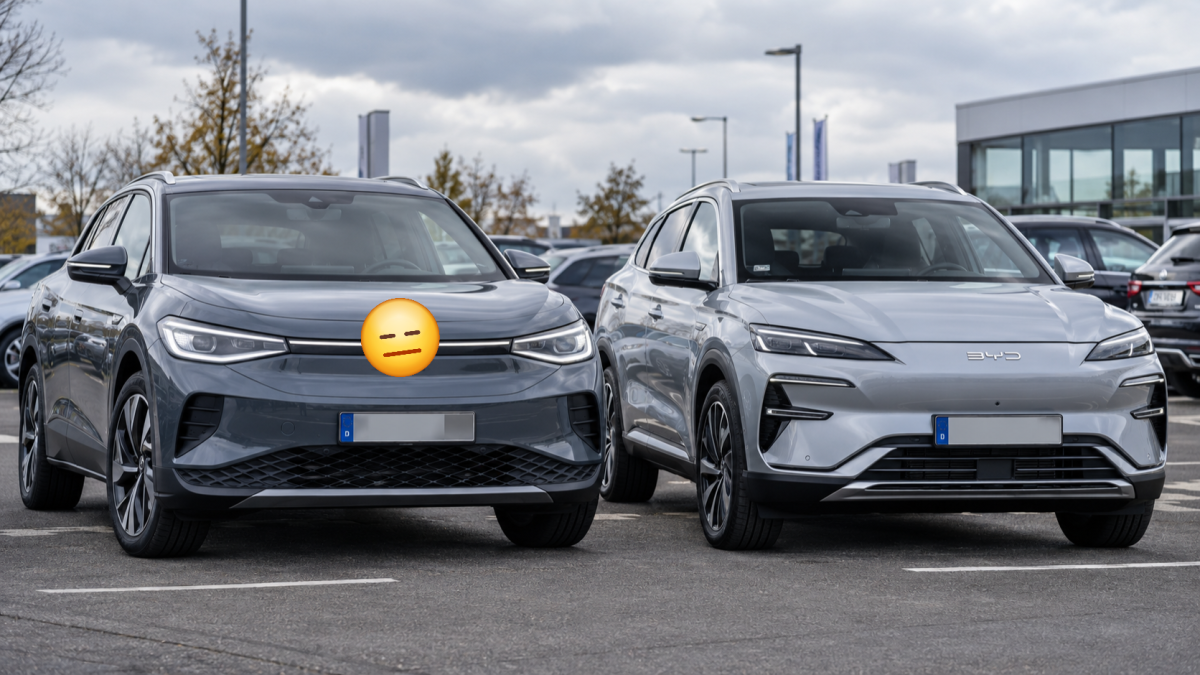
Preheat the battery via update – pre-glow for the ID
Older electric cars from VW and Škoda learn via software updates to warm up their battery before fast charging. Why that can save a lot of time in winter and what fine print I would still read.
For me, the current update for older electric cars from the Volkswagen Group is one of the most pleasing news of the autumn because it fixes a problem many drivers experience every winter: the cold battery at the fast-charging station. At the same time, it shows how much a modern car now depends on software and how much fine print is involved. Still, it is a reason for joy, because retrospectively more functionality for the same car is not available every day.
What does preconditioning actually mean? It refers to the targeted warming of the drive battery before fast charging. Lithium-ion batteries absorb electricity much more slowly in cold conditions because the chemical processes in the cells occur more slowly. If you drive to a DC station with a cold battery in January, you often see only a fraction of the possible charging power. If the battery is brought to a favorable temperature beforehand, it charges noticeably faster. The principle is simple. The implementation just requires the right software.
The pre-glow – waiting for the light
Anyone who dealt with older diesel cars in the eighties or nineties knows the concept of pre-glowing. Turn the ignition key, wait until the orange filament lamp goes out, and only then start. Especially in winter, this little ritual was mandatory; otherwise, the engine would run and start reluctantly or not at all.
Preconditioning is, in a way, the pre-glowing of the electric car, except that it takes place not before driving off, but before charging. And it takes longer. According to Škoda, which InsideEVs refers to, warming up to about 25 degrees takes around 30 to 40 minutes depending on conditions. The manufacturer recommends starting the function about 45 minutes before fast charging. The old bulb would probably have applied for retirement during that waiting time.
The update – who gets it and how it works
According to reports from heise and InsideEVs, the update concerns vehicles based on the Modular Electric Drive Matrix, or MEB for short, i.e., the group's shared electric platform. Among others, the VW ID.4 and ID.5 built before October 2023, ID.3 built until 2024, early ID. Buzz, as well as older Škoda Enyaq models that had no preconditioning until the end of 2023, are mentioned. For VW, the target version is 3.9.1, for Škoda 3.9. According to InsideEVs alone, Škoda has about 200,000 vehicles.
The update is distributed gradually via radio, in technical jargon Over the Air, i.e., without a workshop visit via the car's mobile connection. According to InsideEVs, VW already started distribution at the beginning of November, Škoda starts the first of two updates on November 16, and the second follows from November 30. After installation, preheating can be started manually in the charging menu. At Škoda, the button is only active when the battery is colder than 20 degrees. Automatic preheating when entering a fast-charging station into the navigation system, as supported by newer software generations, is not included. So you have to think of it yourself. After all, the old diesel didn't stop anyone from preheating.
The fine print – conditions I would read
As pleasing as the new feature is, I find the prerequisites just as important. According to heise, the car requires an active Connect contract, one-time consent for data usage, and activated online mode for reception. Installation only starts at 50 percent charge level. During installation, the vehicle cannot be driven or charged, the theft alarm system is inactive, and doors do not open at times. Personal settings like radio favorites can be lost, and there is no return to the old version.
Another point concerns older software versions. By radio, the version only reaches cars with version 3.7; older versions require an interim update or a workshop appointment. According to heise, the vehicle also checks the high-voltage battery for increased self-discharge after installation. If the test is suspicious, a yellow warning light indicates an error, and the owner is advised to visit a workshop. The car remains ready to drive. For me, this is more reassuring than worrying, because I prefer a fault reported by the car itself to one that works quietly.
By the way, the energy for warming up comes from the battery itself and costs range. How much depends on outside temperature, battery size, and heating time; according to heise, Volkswagen has not given specific values. If you drive to the station with a tight charge level, you should plan for that. Unfortunately, physics has not yet approved a heater that heats for free.
Software – the car as a learning tool
The update shows me how the relationship between drivers and their vehicles is changing. In the past, a car was finished at the time of purchase, and improvements were only made in the next model. Today, a four-year-old car can learn a function via radio that was missing at purchase. That's great. But it also means that the manufacturer decides how long to take care of older models. According to heise, there is no binding commitment for generation 3.x about how long safety and bug fixes will follow. A jump to newer software generations is not planned for these vehicles due to missing hardware.
In the end, the retrofitted preconditioning is like the pre-glow of back then: a small step with waiting time that makes all the difference in winter. If you drive an older MEB vehicle, you should check which software version is installed and whether the update is already offered. Do I have at least version 3.7? Is the Connect contract active? Am I scheduling the preheating in time? Those who answer these questions will less often find themselves freezing next to a column that only charges hesitantly in January. The little light is history. The waiting time is gone. And the battery thanks it with more speed.
Freric
You may also like

Fast charging with card – the minibar at the kiosk
Paying with a bank card directly at the charging station is convenient but can be significantly more expensive than the same electricity via app. A r…
Read more →
Between punitive tariffs and seat heating subscription: Germany's e-car problem.
Why does China get cheap e-cars and we can't? I've been asking myself this for a long time. Why do Chinese manufacturers manage to bring electric car…
Read more →
How emission-free is my electric car really? A research.
The Hyundai Ioniq 5 is an all-electric crossover vehicle with a striking, futuristic design. Is my electric car really more environmentally friendly …
Read more →Want more between the blog posts? I share photos and short notes on Bluesky.
Comments
Write a comment