

Children, cats and the art of respecting boundaries.
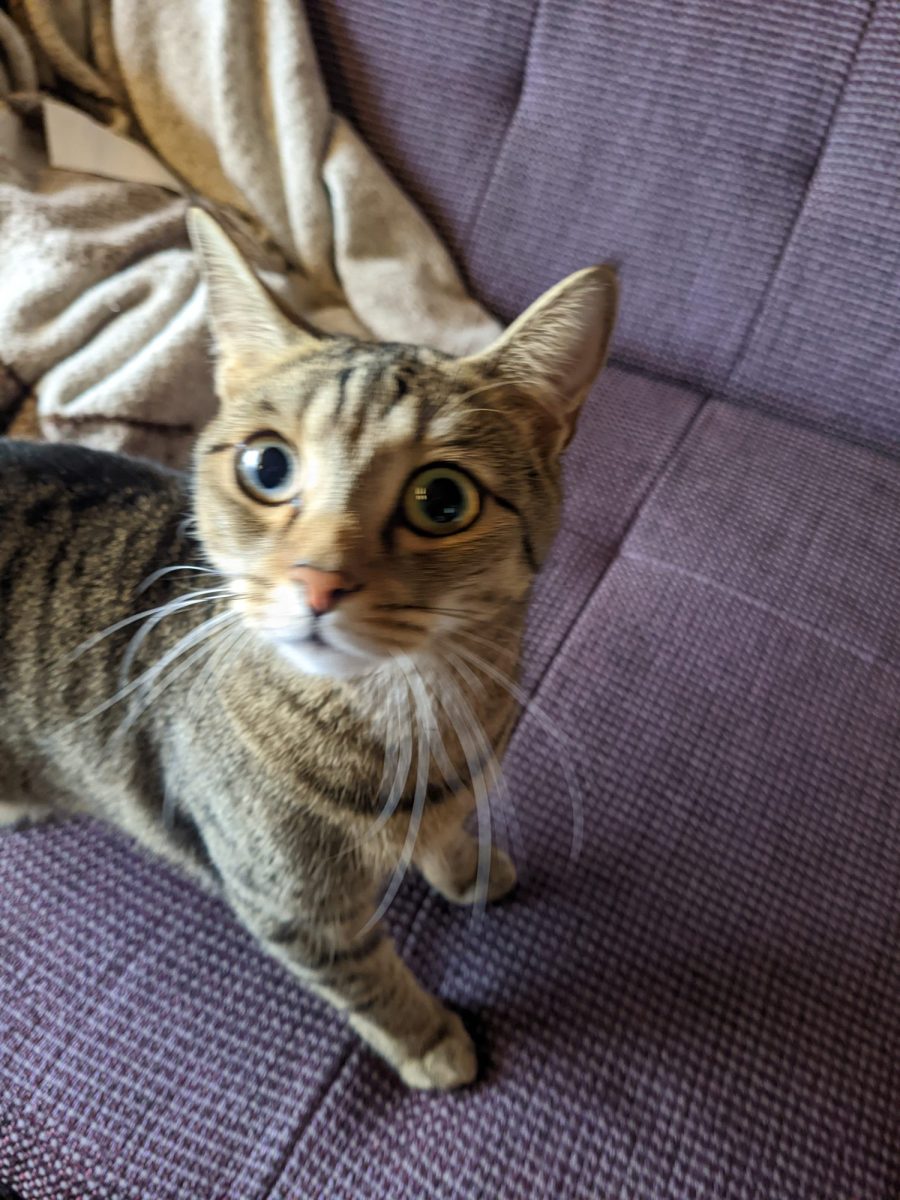
Lima and Speedy are simply part of our life. Not as just any pets that live somewhere next to the house, but as part of our normal family life. I have already written about the two themselves and their different traits. This time I'm more concerned with what it actually means when children grow up with animals and what they can learn along the way. With us, the children experience every day that an animal is not a toy. A cat is not there to be picked up, stroked or played with whenever you feel like it. When it goes away, it leaves. When it withdraws, you leave it alone. And if it sleeps somewhere, you don't have to check every three minutes to see if it might feel like having fun again. Especially with children, this is a learning process. Of course, they want to touch, cuddle, run after them and sometimes just test what works. But that's exactly where the right way to deal with animals begins for me. You have to learn to recognize and accept boundaries. Just because I'm stronger doesn't mean I'm allowed to do everything. Just because I could hold an animal doesn't mean I should hold on to it. That's a clear rule for us. Animals are not hit, kicked or deliberately teased. Not for fun, not out of anger and not because you're annoyed. I think you shouldn't just say things like that to children, but set an example. If we adults treat animals calmly and sensibly, the children will see that. If we leave an animal alone because it withdraws, they will see that too. There are enough situations for this in everyday life. A cat runs away because it gets too loud for it. Then the task is not to run after it, but to let it go. A cat lies somewhere and wants its peace. Then that's just the way it is. It comes back when it wants to.
I think that children learn something that is much bigger than just dealing with cats. They learn that another living being has its own needs. That it can be afraid, annoyed, tired or simply doesn't feel like being close. And hopefully they also learn that you respect such signals. I think that's important because children can understand very quickly that not everything always goes their own way. With pets, you often see the consequences immediately. If you're too wild, the animal goes away. If you stay calm, it might come by itself. You can't force trust. This applies to animals as well as to humans. Then there's responsibility. If you have pets, you don't just have something to pet. There are food bowls, water has to be filled, there's a litter box that unfortunately doesn't clean itself, and at some point a visit to the vet is due. It's all part of it. Of course, in the end, we adults bear the responsibility. I don't think much of the idea that you buy an animal and then explain to the child that it is now completely responsible for it. That rarely works in reality. If an animal is sick, if costs are incurred or decisions have to be made, the parents are called upon. Nevertheless, the children can help and learn a lot in the process. Give food, check water, make sure everything is okay, and even develop an eye for the fact that there is still someone living in the house who depends on us. And that's exactly the point I particularly like about it. An animal can't just take care of itself. It can't say: Today you've forgotten me, then I'll just go shopping. It relies on us. In this way, children learn something very concrete about responsibility. Responsibility doesn't just mean doing something when you feel like it. It means doing something because someone relies on it. You notice that every day with pets. The bowl has to be filled, no matter if you're tired. The water has to be fresh, no matter if something more exciting is going on. And if something is wrong with an animal, you don't look away.
At the same time, of course, the children also get a lot in return. Not in the sense of kitschy gratitude. Cats are rather special anyway. I think they basically assume that we should be grateful that we are allowed to live with them. But still, a connection is created. The animals are simply there. They belong to the house, to the sofa, to the hallway and to family life. The children don't know a home any differently. There's a cat running through the picture when you're doing something else. There's one lying around somewhere. One comes when it wants attention. And sometimes you just sit next to each other without anything having to happen. That's exactly what I think is beautiful. An animal doesn't judge a child. It doesn't care about homework, school grades or whether the room is tidy. It also doesn't make big speeches about what still needs to be done today. It's just there. That's why I don't want to turn pets into little therapists. In my opinion, they wouldn't be either. They are animals with their own needs. But it can still have something calming when a child sits down with a cat, strokes it or is simply with it.
And there is another point that I think is very important. Children learn through pets not to see animals as some anonymous thing. Those who live with animals very quickly realize that they are individual living beings. They have likes, dislikes, fears and habits. They react differently. They seek closeness or withdraw. And at some point you automatically start to take a closer look. In the best case, this is exactly what gives rise to respect for animals as a whole. I think it's important that children learn that animals are not worth less just because they are smaller or can't speak. We humans are physically superior to them and determine a large part of their lives. That's why I think we have a special responsibility. After all, the animals didn't choose us. We decided that they live with us. This also includes treating them well. Of course, everyday life with cats is not only romantic. There is hair in places where you didn't actually order it, cat litter miraculously spreads further than it should be physically possible, and furniture is sometimes used differently than the manufacturer intended. And then there are those special surprises where it's better not to walk barefoot through the house in the morning. But that's exactly the whole package. Pets are not a decorative piece or an educational project. You shouldn't get an animal just so that the children learn responsibility. An animal is a decision for many years.
But if it is part of the family anyway, then children can learn an incredible amount through this coexistence. Consideration, patience, responsibility and, above all, respect for other living beings. It is important to me that our children can't just say: "We have two cats." I want them to understand what is behind this. That you take care of a living being, that you treat it well, that you respect its boundaries, that you take responsibility when someone is dependent on you, and that you don't treat weaker beings roughly, but especially mindfully. If Lima and Speedy give them some of that, then that's probably worth more than many explanations we could give them at some point. And probably the two of them themselves don't even know what they are teaching our children in the process.
Freric
You may also like

Tolerance and me.
I've been thinking about the word tolerance more often lately. Not because I think I have to explain to others how they have to live or think. Rather…
Read more →
When the children ask less
Today, Dad still remembers everything. But for how long, actually? I am the father of two children, four and seven years old. So I am currently in a …
Read more →
Kinderheim, (k)ein Alptraum.... Teil 1 by @freric1973
Children's Home... Part 1 That sounds pretty brutal at first. When I sometimes hear overburdened parents say: "Behave and be quiet, otherwise I'll pu…
Read more →Want more between the blog posts? I share photos and short notes on Bluesky.
Comments
Write a comment