
Understanding Depression: Between Prejudice, Treatment and Real Support
Understanding depression: Why "pull yourself together" is about as helpful as "just don't have a fever"
I don't just know depression from books, any guidebooks or other people's stories. I'm affected myself. That's why I know how strange some well-intentioned advice can sound when you're actually in a depressive phase. "Just think positively." "Go out into the fresh air." "You have to distract yourself a bit." And of course the classic: "Just pull yourself together." Most people probably don't mean such sentences in a bad way. The only problem is that they help about as much as telling a person with a fever: "Just have 37 degrees."
Depression is not a bad mood or a particularly bad Monday. It is also not the feeling that everyone occasionally has when something goes wrong and you don't have a particularly good mood for a few days. Being sad is part of life. Depression is something else. It can change thinking, sleep, concentration, drive, feelings and your own perception. It can cause things that are normally taken for granted to suddenly cost an incredible amount of energy. Get up, shower, shop, open a letter, call someone back or simply make a decision. From the outside, this may look ridiculous. You might think: Now just get up. And that's exactly one of the biggest misunderstandings. I can certainly know what I should do. I can tell myself ten times that I should finally get up, get something done or get in touch with someone. But that doesn't mean that I can do it at that moment. Wanting and being able to do it are not always the same.
That's exactly why the sentence "pull yourself together" hits me in a very special way. Because most of the time, at this point, I've already asked myself a hundred times to pull myself together. I don't need someone else to explain to me that I'm obviously not trying hard enough. People with depression often blame themselves enough anyway. Why can't I do it? Why can't I be happy? Why am I so exhausted? Why doesn't it work for everyone else and for me? These thoughts don't need reinforcement from the outside.
Another misconception is the idea that a depressed person must necessarily lie crying in a dark room all day. This is what severe depression can look like, but not every one. I can laugh. I can make a joke. I can talk. I can work or take care of my everyday life. I can look completely normal in a photo. None of this is proof that I am mentally well. People can function on the outside for a surprisingly long time, even though it looks completely different on the inside. Perhaps this is one of the reasons why depression is often underestimated. Others see what I do. But they don't see how much strength it costs me.
The sentence "Others have it much worse" is also one of these well-intentioned pieces of wisdom that can actually be spared. Of course, other people have it worse. Somewhere there will always be someone whose situation is objectively more dramatic. But an illness does not work according to a ranking. If I break a leg, it won't heal because someone else has broken both legs. And depression doesn't disappear because another person has bigger problems. Statements like "You have a family", "You have a job", "You're doing well financially" or "Actually, you have everything" don't help either. Depression does not take stock of my life beforehand and then decides whether I have enough reasons to get sick.
The causes are also much more complicated than many think. Sometimes there is actually an obvious trigger: a separation, a death, years of stress, a serious illness or other stresses. Often, however, various factors come together. Predisposition, physical processes, psychological stress, experiences and life circumstances can intertwine. And sometimes there is no single reason to point to. That doesn't make depression any less real.
Of course, there are things that can help. Exercise can help. Daylight can help. A regular daily routine can help. Contacts with other people can help. But the little word "can" is crucial. A walk is not a treatment for every depression. There is a pretty big difference between "Exercise can support treatment" and "Go for a walk, then you'll feel better". If depression would actually disappear reliably with a little fresh air, we could save ourselves psychotherapy, psychiatric treatment and medication. Then health insurance companies would probably pay for hiking boots on prescription and the matter would be settled.
This brings me to a topic in which, in my experience, there are also a lot of prejudices: medication. More precisely, antidepressants. Even the word triggers strange ideas in some people. You hear statements like "Then you're just stoned", "That changes your personality", "You become dependent on it" or "You have to solve your problems yourself". It is precisely such statements that show how great the uncertainty about mental illness still is.
Antidepressants are neither classic sedatives nor do they simply make a person happy. They also do not usually produce artificial intoxication. Rather, the aim is to reduce depressive symptoms, such as a depressed mood, listlessness or certain negative thought patterns. There are different groups of antidepressants with different mechanisms of action. For example, so-called SSRIs, i.e. selective serotonin reuptake inhibitors, are used particularly frequently. However, one should not fall into the old, overly simplistic idea that depression is merely a "serotonin deficiency" that can be replenished with a tablet. Our brain is not that simple. The exact biological mechanisms of depression and also the effect of the medication are much more complex.
Another important point is that antidepressants don't work like a headache pill. I take a pill and an hour later the depression is gone – that's not how it works. It often takes some time before a change is noticeable at all. The German Depression Aid points out that the first improvements often appear within about two weeks and that the full antidepressant effect often takes three to four weeks. This is especially important to know at the beginning of treatment. After five days, you can't automatically say: The medication doesn't help.
And then there are the side effects. In my opinion, you should also talk openly about this and not pretend that antidepressants are harmless sweets. Depending on the active ingredient, nausea, headaches, inner restlessness, sleep problems or sexual dysfunction, among other things, can occur. Some side effects occur especially at the beginning and become weaker later, others can last longer. Not everyone gets the same side effects and not every drug suits everyone. This is exactly why it can sometimes be necessary to find another active ingredient or dosage together with the doctor.
The issue of weight also plays a role in some preparations, for example. Other medications can have more of an activating or more dampening effect. In addition, there are possible interactions with other medications and, of course, individual pre-existing conditions. The decision for a particular antidepressant is therefore not a question of "Which is the best?" It is about which drug is suitable for the respective person, weighing up the effect, side effects and personal situation. The patient information on the National Care Guideline expressly points out that the various antidepressants are similarly effective overall, but differ in their side effect profiles, among other things.
One point that is always confused is dependence. According to the usual medical understanding, antidepressants are not addictive like alcohol, benzodiazepines or other addictive substances. So you usually don't develop a desire to take more and more of them to get high. Nevertheless, the body can adapt to a drug. Therefore, "non-addictive" does not mean that you simply take an antidepressant today and suddenly stop it tomorrow. If you stop taking it too quickly, symptoms such as dizziness, headaches, nausea or unusual body sensations can occur. This is why many antidepressants are gradually reduced at the end of treatment - this is called tapering off. This should not happen on your own, but should be discussed with the attending physician.
It would be just as wrong to stop taking a medication immediately as soon as you feel better. It is precisely then that continuing to take it can be important to prevent a relapse. Patient information on the National Care Guideline often recommends continued treatment for several months after the symptoms have subsided; in the case of repeated or severe depressive episodes, much longer treatment can also be useful. How long someone needs a medication is an individual medical decision.
I think it's important to write this so clearly, because mental medication is still judged differently than medication for physical illnesses. When someone takes medication for high blood pressure, hardly anyone you know comes up with the idea of saying, "Why don't you try it with a positive attitude first?" In the case of antidepressants, on the other hand, suddenly every second person seems to have opened a small private psychiatric practice. Then it is explained that medication is fundamentally bad, that you only have to change your lifestyle or that medication only suppresses problems.
Of course, medication does not automatically solve all the problems of my life. An antidepressant does not regulate arguments, does not eliminate stress and does not relieve me of difficult decisions. This is exactly why psychotherapy, for example, is so important. It can be about understanding patterns of thought and behavior, dealing with stress differently and developing strategies for difficult phases. Medication and psychotherapy are not opponents. Depending on the severity of the depression, they can be used individually or combined with each other. In the case of severe depression, a combination of psychotherapy and antidepressants is often recommended.
Nobody should get the impression that a drug always works immediately. Sometimes the first preparation does not work sufficiently. Sometimes the side effects are so unpleasant that it is necessary to change. Sometimes the dosage has to be adjusted or the treatment has to be supplemented in other ways. This does not automatically mean that depression is not treatable. It simply means that psychiatric treatment is individual and sometimes several attempts are necessary before something works well.
For me, therefore, a sensible approach to depression also includes neither demonizing nor glorifying medication. They can be a very important part of treatment, but they are not a magic wand. And they belong in professional supervision. The same applies to psychotherapy. Here, too, one should say goodbye to the idea that a therapist says three clever sentences and then all problems are gone. Treatment takes time.
What is particularly important to me when dealing with other people can actually be summarized quite simply: I want to be taken seriously. No one has to solve my depression for me. No one has to find the perfect words. And no one has to set themselves up as a hobby psychologist. A simple "I notice that you're not feeling well right now" can be much more helpful than ten unasked pieces of advice.
Practical support can also be enormously valuable. Sometimes it is more helpful to accompany a person to an appointment, to get something done together, or simply to keep in touch regularly than to constantly explain to them what they should do. Depression can cause you to withdraw. You may not respond to messages immediately. You cancel meetings or get in touch less often. From the outside, this may seem like disinterest. In reality, even writing a message can be too much.
However, the environment can also be honest. Depression can also be stressful for relatives and friends. It is not their job to play therapist around the clock. They are allowed to have limits, they are allowed to be exhausted and they are allowed to get help themselves. Support does not mean giving up on yourself.
What I wish for is actually not that complicated: fewer judgments and a little more understanding that mental illness is an illness. Depression is not a sign of laziness, lack of gratitude or lack of discipline. It can affect people who are professionally successful, have a family, have friends and actually lead a life where others would say: "You're fine."
And it can also affect me.
I can still laugh. I can function. I can cope with my everyday life. I can have good days and still be affected by depression. A mental illness does not take away my personality and it does not make me my diagnosis.
Perhaps a lot would be gained if we started thinking as naturally with depression as we did with physical illnesses. Nobody decides to do it voluntarily. Nobody gets well because someone else puts enough pressure on them. And no one has to prove that they are bad enough to deserve help.
That's why this one comparison sticks with me: "Pull yourself together" is about as helpful in depression as "Just don't have a fever".
It sounds like a solution.
It's just not one.
Freric

You may also like
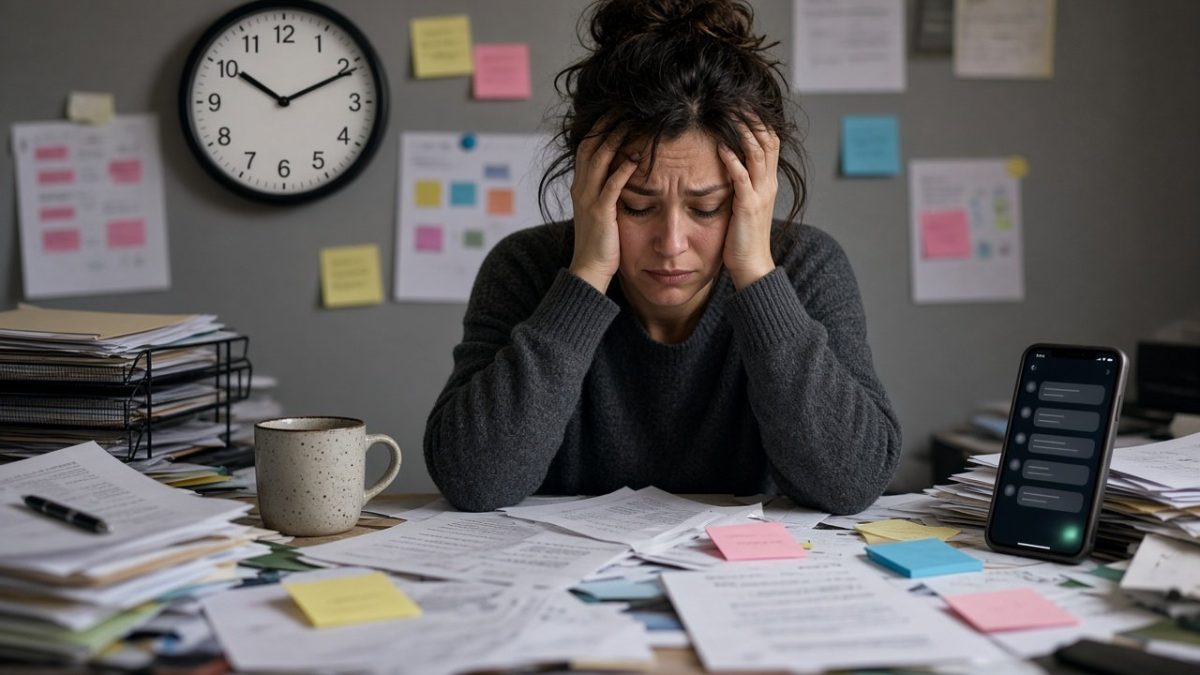
I know I'm not alone in this – about stress, responsibility, and real strain.
Why a full head can make you just as tired as a full day at work Sometimes there are days when I haven't done much physically and still have the feel…
Read more →
Tolerance and me.
I've been thinking about the word tolerance more often lately. Not because I think I have to explain to others how they have to live or think. Rather…
Read more →
Everything used to be better – the rearview mirror is lying
Was everything better in the past? My rearview mirror sometimes tells me quite a bit of nonsense I now belong to the generation that occasionally say…
Read more →Want more between the blog posts? I share photos and short notes on Bluesky.
Comments
Write a comment